Sir Everton Weekes obituary
Outstanding West Indies cricketer and one of the Three Ws who lit up the game in the 1940s and 50s
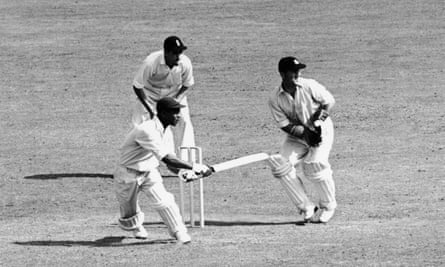
Published on Thu 2 Jul 2020 13.46 BST
Cricket
has produced hundreds of individual heroes, memorable pairs by the
score, and several permutations of West Indian pace-bowling quartets in
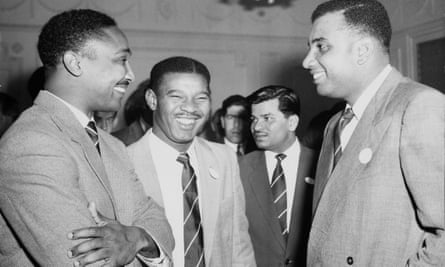
the 1970s and 80s, but only one genuine trio: the Three Ws – Frank
Worrell, Everton Weekes and Clyde Walcott
– who graced the game from the late 1940s to the late 50s. Across that
decade the dismissal of a West Indies opener did not make things easier
on opposing bowlers, but considerably harder, with Worrell going in at
No 3 and Weekes and Walcott still to come at four and five.
With
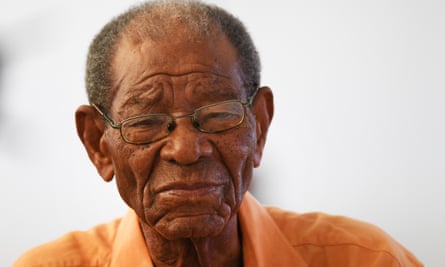
4,455 Test runs and 15 Test centuries, Weekes, who has died aged 95,
was the most prolific scorer of the three, although some held that
Worrell made a greater overall contribution through also being captain,
and Walcott through also being wicketkeeper. At the crease, though, few
could deny Weekes’s striking likeness to Donald Bradman:
he attacked the bowling in the same way as Bradman, and with similar
results, if with a slightly less spectacular (though still highly
impressive) average of 58.61.
He
cut, hooked and drove powerfully off either foot the fastest bowlers of
his time. His rare defensive stroke was invariably played late, as
though he mentally ran through every possible aggressive shot, looking
until the last moment for a way of attacking the bowling before
reluctantly conceding that the particular ball could only be played
defensively; which defensive stroke he then employed as gracefully as he
did grudgingly.
Playing for West Indies
against Hampshire in 1950, Weekes hit 246 not out in 242 minutes, with
his first century coming in 95 minutes. Eleven days later, against
Leicestershire, he made 200 not out, his first hundred coming in only 65
minutes, a performance that prompted Worrell, his partner at the
wicket, to advise him not to hit the ball so hard. “You give the
fielders no chance, so they don’t chase the ball,” said Worrell. “Hit a
little less hard and they will have to run after it. Watch how quickly
they tire.”
Weekes is said to have appreciated
the joke, but evidently did not heed the advice: he continued hitting
every ball as hard as he could. Belligerence did not overwhelm
meticulous judgment, though: like Bradman, Weekes deliberately avoided
hitting sixes, deeming them an unjustifiable risk; in his Test career he
struck the ball clean over the boundary just once.
In
his debut Test against England at home in Barbados in 1948, he scored
35 and 25. After scores of 36, 20 and 36 in his next two Tests, only his
141 in his single innings of the last Test in Jamaica kept him in the
team for his first overseas tour against India the next year, where he
came into his own, hitting four consecutive Test centuries to create a
record of five consecutive Test centuries that still stands today.
In
New Zealand in 1955-56, Weekes hit three centuries in the first three
Tests (in all of which the West Indies needed to bat only once), five
centuries in his first five first-class innings and six centuries out of
a total of 10 first-class innings. He was also a brilliantly versatile
fielder, taking 49 catches in his 48 Tests, and was a 1951 Wisden
Cricketer of the Year.
It is no surprise that
the Three Ws were part of the team that for the first time defeated
England at Lord’s (Weekes scoring 63 twice) and won the Test series in
1950. They were a big draw at the gates, between them making 1,106 runs,
nearly half the West Indies total of 2,313. Weekes contributed 338 runs
from six innings, including 129 at Trent Bridge, part of a 283-run
partnership with Worrell. Weekes’s highest first-class score of 304 not
out came against Cambridge University that summer, one of five scores of
200 or more that he posted during the tour.
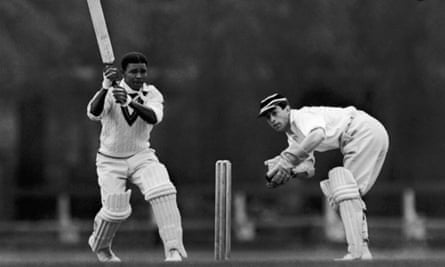
What
is staggering is that three batsmen so great should have lived at the
same time, played for the same team and be born in the same, tiny place:
the island of Barbados. More than anyone before or after them, other
than Sir Garfield Sobers, also from Barbados, and George Headley
(who, though he played for Jamaica, had a Barbadian father), the Three
Ws defined West Indies cricket. Devastating as their impact on the West
Indian batting order was, it was faint compared with their impact on the
West Indian social order. They wreaked greater havoc on staid,
white-dominated Barbadian and Caribbean society than on any bowling
attack they faced.
The Three Ws, who were all
eventually knighted (Weekes in 1995), made a statement of racial
equality as powerful as it was simple: if you would keep us down, you
must first knock over our stumps. Like Headley before them, their
ability forced the ruling classes of their time to deal with them as
equals. Nevertheless, Worrell was not named the first black captain of
the West Indies unequivocally until 1961; without Headley’s example, and
without Weekes and Walcott following him in the batting order, the
triumph of the human spirit might have been even longer delayed.
Born
in the New Orleans slum abutting the Kensington Oval, Barbados’s Test
venue in the capital, Bridgetown, Weekes was an inner-city child.
Educated at St Leonard’s school, Bridgetown, like other poor boys he was
allowed net practice at Kensington, where ability and a nominal
groundsman’s job could bring them places on a team representing a club
they could not join. Weekes played in the Barbados Cricket League from
the age of 12 and was both good and strong-willed enough to make his
debut for Barbados in 1944: he was named captain in 1958, the year of
his last appearance for the West Indies, in the fifth Test against
Pakistan in Trinidad. His relentless, forceful batting style took its
toll on his body, and he retired from Test cricket aged only 32, though
he continued playing first-class cricket until 1964. As only the second
black captain of Barbados, he was outstanding, leading strong Barbadian
teams that believed in him implicitly.
After
cricket he found employment and respect as a cricket coach and
commentator in Barbados, and as an international match referee, but not a
great deal of money. An excellent bridge player, he represented
Barbados for many years. But it is indubitably for his batting that he
will be remembered.
He is survived by three
sons and a daughter. His son Andy Weekes, from his marriage to Joan,
which ended in divorce, played youth cricket for Barbados; David Murray,
a son from another relationship, was also a West Indies cricketer; and a
grandson, Ricky Hoyte, also played cricket for Barbados.
• Everton DeCourcy Weekes, cricketer, born 26 February 1925; died 1 July 2020

No comments:
Post a Comment